

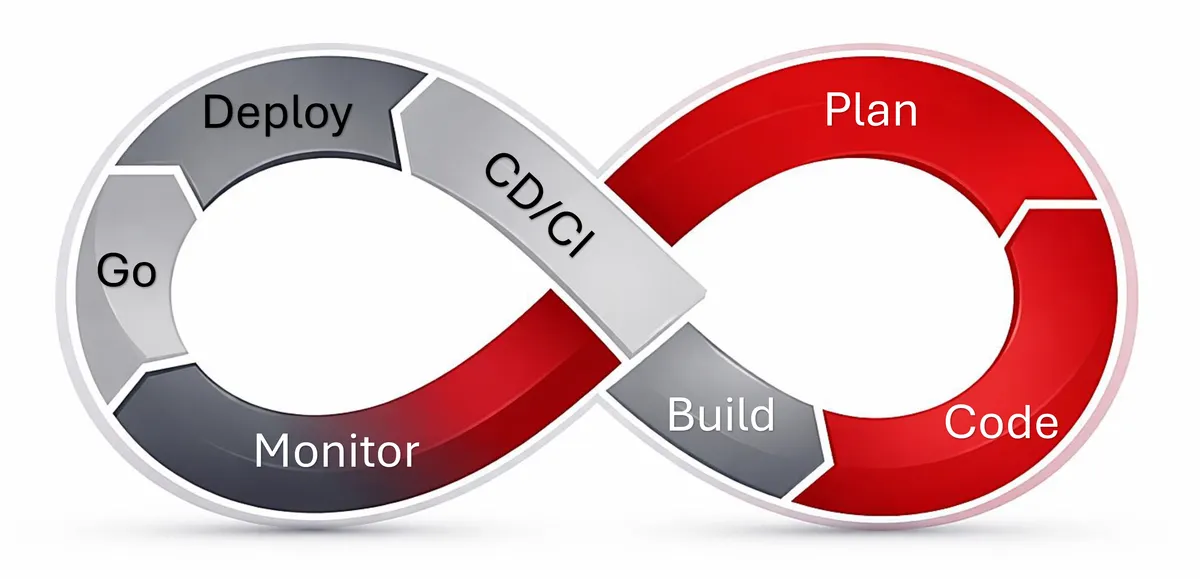
Dev Ops
We support our clients in adopting and evolving practical and sustainable DevOps models, adapting them to the organization’s context, technology landscape, and level of maturity.
Our approach is not tied to a single model: we can operate as the client’s software factory or integrate into their existing DevOps processes, becoming one or more building blocks within the development and release pipeline.
A DevOps model that adapts to the client
Over the years, we have worked in very different environments, gaining experience across a wide range of DevOps scenarios:
- Startups and companies without a structured IT department, where Bitia operates as a true software factory, managing the entire DevOps lifecycle: from design and development to release and operations.
- Companies with existing technical teams, where we integrate into the current DevOps pipeline, taking responsibility for specific components (such as front-end, back-end, or application services), working in synergy with internal teams, their methods, and their tools.
- Enterprise environments, where we operate within structured software factories, adopting the client’s processes, tools, and pipelines, developing in our own environments and deploying to the client’s infrastructures and environments.
Between these extremes, there are many intermediate configurations: our role adapts to what the client already has, what is missing, and what they aim to build.
Method, integration, and continuity
Regardless of the scenario, our contribution is based on a few key principles:
- real integration with the client’s processes and organization;
- automation and quality throughout the entire development lifecycle;
- continuous collaboration between development, operations, and business;
- strong focus on security, stability, and maintainability of solutions.
The result is a DevOps model that enables frequent releases, reduces operational risks, and ensures continuity and long-term evolution.
Skills and tools supporting the process
We have developed extensive experience using the main tools that support DevOps practices, covering all phases of the software lifecycle: planning, development, continuous integration, release, operations, and monitoring.
We use the technologies that best fit the client’s context, integrating with existing tools or introducing new solutions when needed, always with a pragmatic and results-oriented approach.